






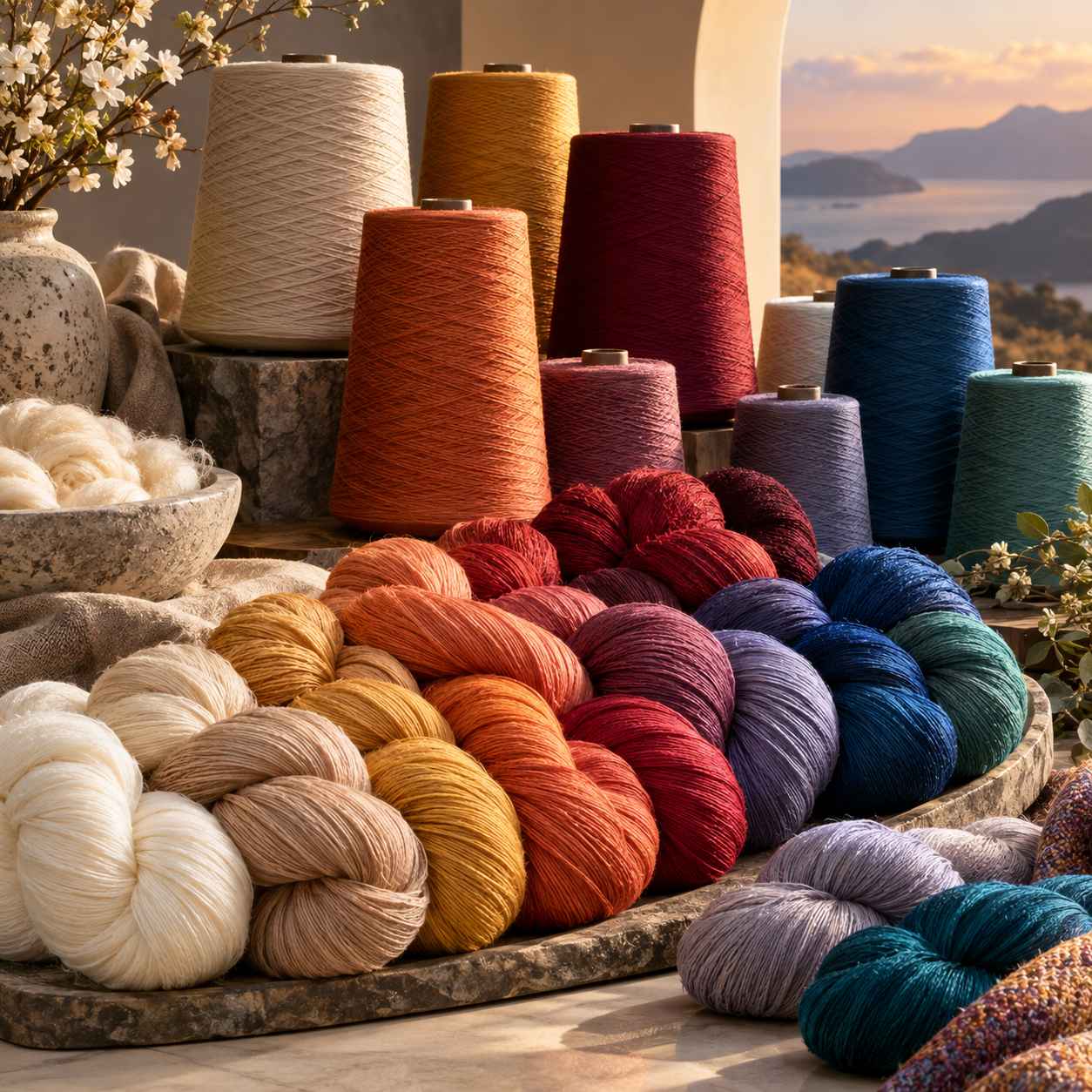
Modern textile and industrial manufacturing increasingly depends on materials that can deliver strength, consistency, flexibility, and reliable performance. As manufacturers look for materials that can meet demanding production requirements, synthetic fibers have become an important part of many applications, ranging from apparel and technical textiles to industrial meshes, ropes, filtration products, and specialized components.
Among these materials, nylon yarn continues to have an important role because of its combination of strength, abrasion resistance, flexibility, and resilience. Nylon fibers are used across both textile and industrial applications, including technical fabrics, ropes, fishing nets, carpets, safety products, and reinforcement materials.
Understanding the Role of Synthetic Fibers
Synthetic fibers are manufactured from polymer-based materials and can be engineered to provide specific characteristics for different applications. Unlike natural fibers, their properties can be controlled during manufacturing to achieve requirements related to strength, elongation, durability, dimensional stability, and surface characteristics.
This flexibility makes synthetic fibers valuable for manufacturers working with specialized products. Depending on the application, manufacturers can select different fiber types, filament structures, deniers, and processing techniques.
The choice of fiber ultimately depends on the intended end use. Apparel may require softness and flexibility, while industrial products may prioritize tensile strength, abrasion resistance, dimensional stability, or long-term durability.
Why Nylon Yarn Remains Important
Nylon yarn is widely recognized for its combination of mechanical performance and versatility. Nylon 6 and nylon 66 are among the commonly used nylon types, with applications extending from clothing and hosiery to technical textiles and industrial products.
One of the major advantages of nylon is its resistance to repeated mechanical stress. Its elasticity and recovery characteristics can also be useful where materials need to withstand repeated movement without quickly losing their functional properties.
Nylon-based materials are found in applications such as
- Technical textiles
- Carpets and floor coverings
- Ropes and cordage
- Fishing nets
- Safety-related textile products
- Tire reinforcement
- Industrial meshes
- Filtration materials
- Brush and bristle applications
- Sports-related products
The broad range of applications demonstrates why nylon remains relevant across multiple manufacturing sectors.
Nylon Monofilament and Specialized Applications
Monofilament is different from conventional multifilament yarn because it consists of a continuous single filament. This structure can provide useful characteristics for applications where surface uniformity, controlled diameter, flexibility, and abrasion resistance are important.
Nylon monofilaments are used in products such as nets, meshes, brushes, technical textiles, and specialized industrial components. Their performance can depend on factors including filament diameter, tensile properties, elongation, processing conditions, and the requirements of the final application.
For manufacturers, selecting the correct monofilament specification is therefore an important part of product development. A material suitable for a lightweight textile application may not necessarily provide the characteristics required for an industrial mesh or brush.
What Manufacturers Should Consider When Selecting Fiber Materials
Choosing a fiber should involve more than comparing prices. Manufacturers should consider how the material will perform throughout production and during its intended service life.
1. Mechanical Strength
Strength requirements vary significantly between applications. Products exposed to continuous tension or mechanical loads may require higher-strength fiber specifications.
2. Abrasion Resistance
Applications involving friction or repeated movement can benefit from materials with good abrasion resistance. This is particularly relevant to industrial textiles, ropes, carpets, and other products exposed to mechanical wear.
3. Flexibility and Elongation
The required degree of flexibility depends on the product. Some applications need a material capable of controlled elongation, while others require dimensional stability.
4. Diameter and Uniformity
For monofilament applications, consistent diameter can be particularly important. Variations may affect weaving, mesh formation, filtration performance, or the characteristics of the finished product.
5. End-Use Conditions
Temperature, moisture, chemicals, mechanical stress, and environmental exposure should all be considered before selecting a fiber. The right material is ultimately the one that matches the operating conditions of the finished product.
Working With Experienced Fiber Specialists
As synthetic fiber applications become more specialized, manufacturers increasingly benefit from working with suppliers who understand both material characteristics and end-use requirements.
Businesses looking for synthetic fiber & monofilament experts can evaluate suppliers based on their product knowledge, manufacturing capabilities, quality consistency, customization options, and understanding of application-specific requirements.
A knowledgeable supplier can help manufacturers assess factors such as yarn type, filament structure, diameter, strength, finish, and other specifications before production begins. This can make material selection more systematic and reduce the risk of choosing a specification that does not match the intended application.
Conclusion
Synthetic fibers have become an essential part of modern textile and industrial manufacturing. From everyday textile products to technical meshes, reinforcement materials, ropes, nets, and specialized components, these materials support a wide range of applications.
Nylon yarn remains particularly versatile because of its combination of strength, flexibility, abrasion resistance, and resilience. At the same time, nylon monofilament provides manufacturers with another option for applications requiring a continuous, controlled filament structure.
For businesses developing specialized textile or industrial products, understanding material specifications and working with experienced synthetic fiber & monofilament experts can help create a more informed approach to material selection and product development.